A Design and Innovation Master’s Thesis
IMPLEMENTING BOTTOM-UP INNOVATION IN HEALTHCARE
The problem:
How might we help innovation champions at Rigshospitalet understand the hospital’s logistics so they can more easily spot and overcome barriers when implementing new ideas?
There is a graveyard of good ideas in healthcare. They were loved, they had value, they helped people, but they didn’t fit the system.
About
In healthcare innovation doesn’t only come from cutting-edge technology. Just as often, it can origin from simple, meaningful interventions created by frontline medical staff. These ideas are rooted in real contexts and designed to solve real problems.
Yet the system is not built to recognize or scale them. One of the biggest barriers is the hospital logistics machine, which is highly effective but also rigid and complex. It ensures that vital medical supplies flow smoothly from manufacturers and storage to patients and frontline workers, but that very efficiency makes it difficult for new solutions to enter.
This project set out to change that. Together with two thesis partners, we developed a toolkit to help local innovation units to understand the hospital logistics system in clear, simple terms. It shows how an idea fits into existing flows, who to contact, what steps to take, and where adjustments may be needed for smooth integration. What is normally a complex and time-consuming task is distilled into a focused 1–2 hour workshop.
By bridging the gap between frontline creativity and systemic logistics, the toolkit helps good ideas not just survive but thrive.
My role
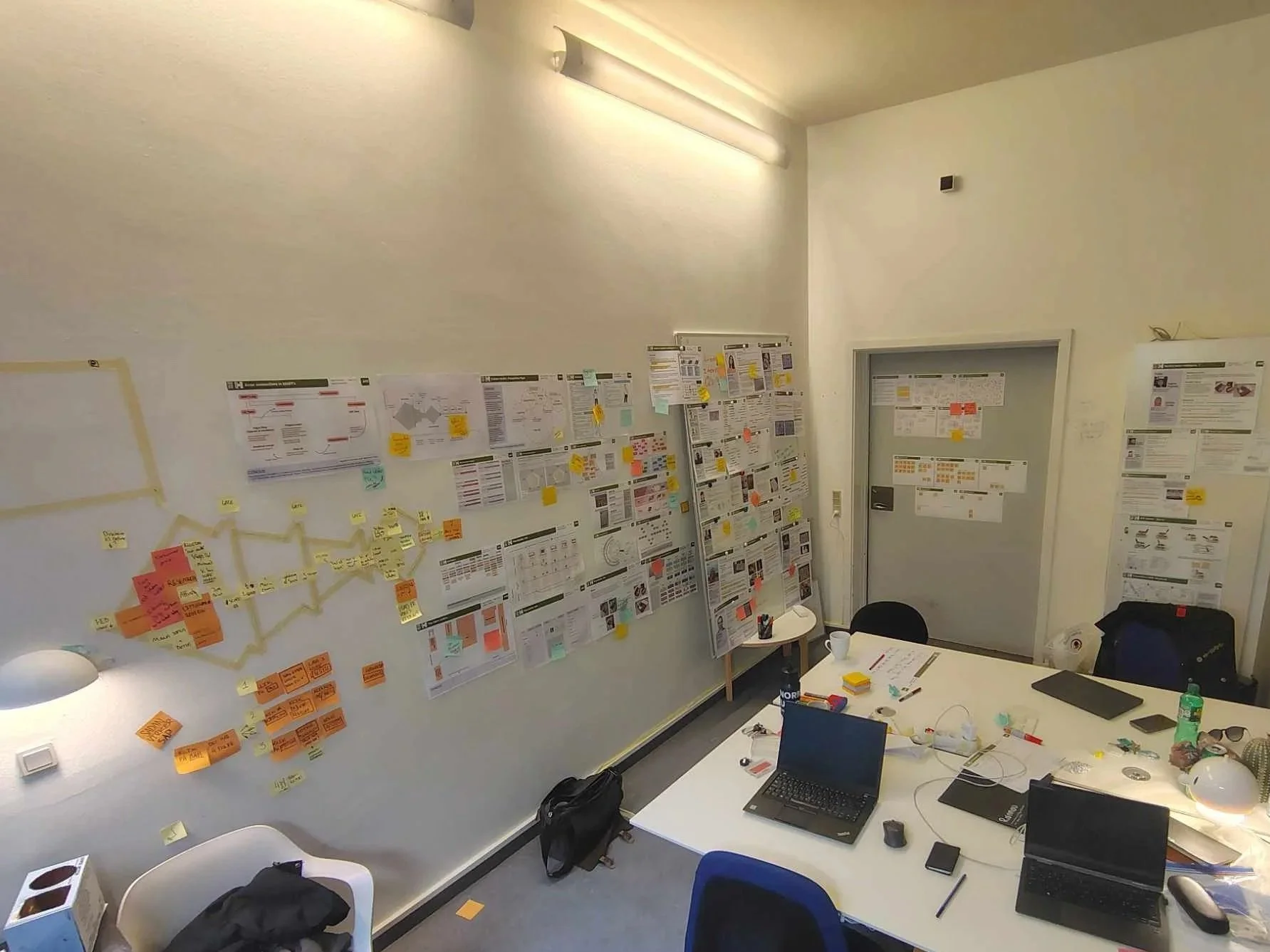
Mapped logistics and stakeholders through field studies at Rigshospitalet
Co-developed a gamified Toolkit to guide and facilitate implementation
Translated complex hospital workflows into actionable steps using system design methods
Result
Toolkit helps stakeholders quickly identify barriers and plan feasible and viable implementation steps within 1–2 hours.
From complex and siloed information to simple shared understanding across staff and management
In validation of the concept, created detailed implementation plan for an innovation currently being developed called “PlanTavlen”
Learnings
Learned to navigate complex systems and translate them into clear, actionable insights.
Strengthened my ability to engage stakeholders and balance diverse clinical and organizational perspectives.
Gained experience in facilitating co-creation and workshop processes that turn insights into concrete outcomes.
Learned how to communicate complexity simply, making solutions accessible and practical for real implementation.
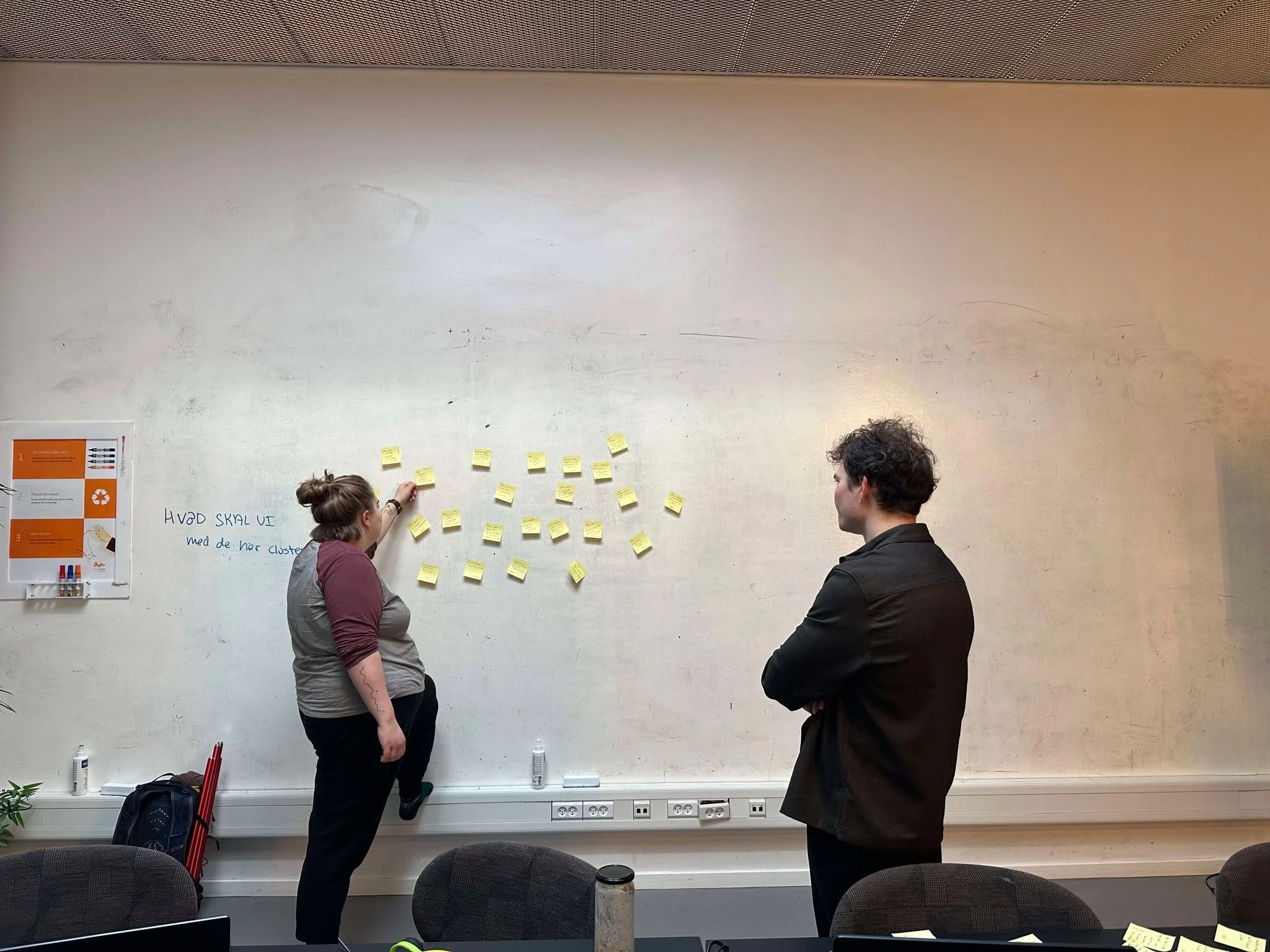
We started with a blank canvas, entering uncharted territory, equipped only with questions and the design thinking toolbox to navigate them.

Site visits, going into the belly of the beast and talking to people in logistics, support roles, and medical work, were crucial for building a holistic understanding of the domain.
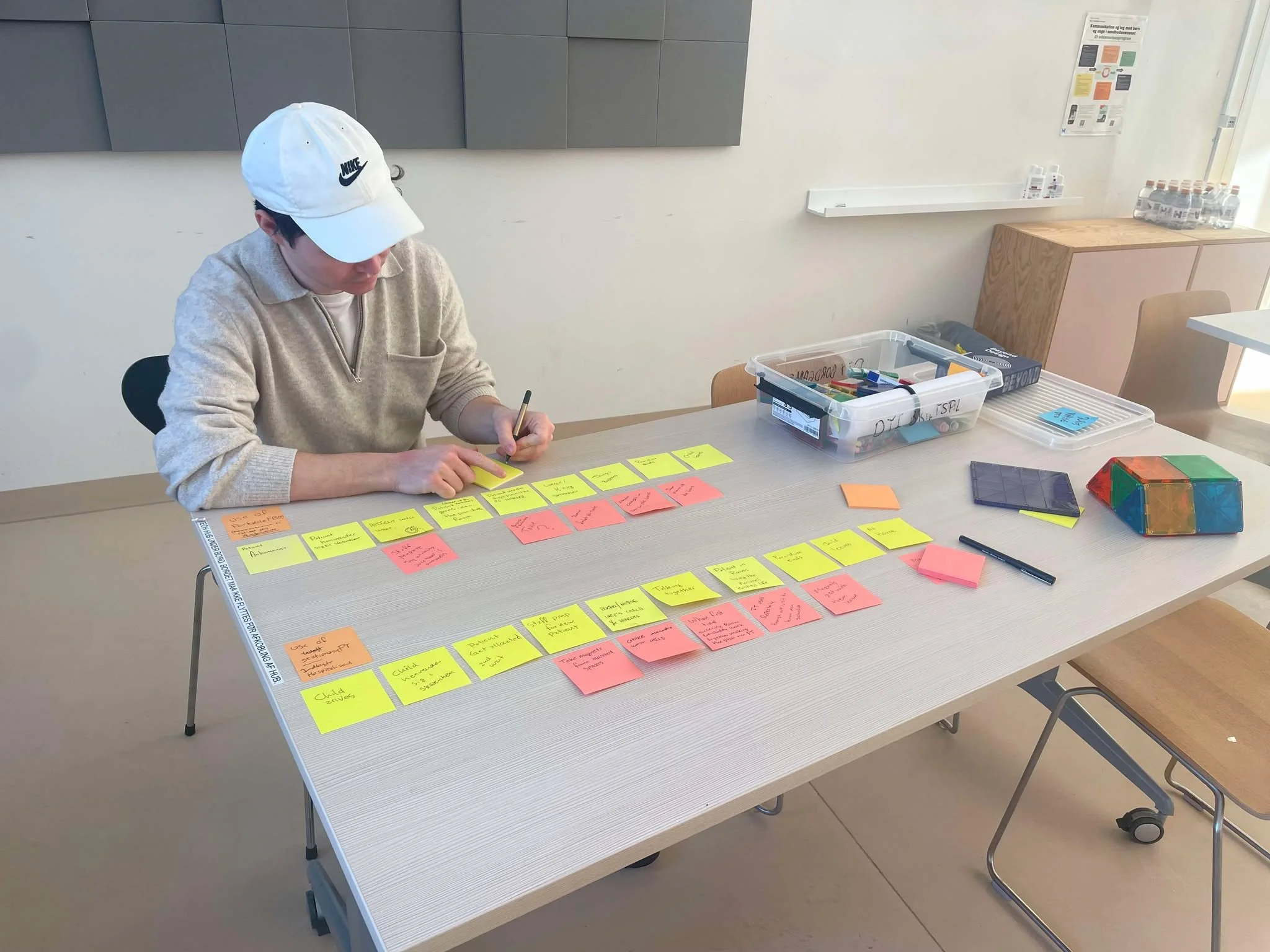
One of our main challenges was to thoroughly document information while trying to make sense of the overwhelming complexity.
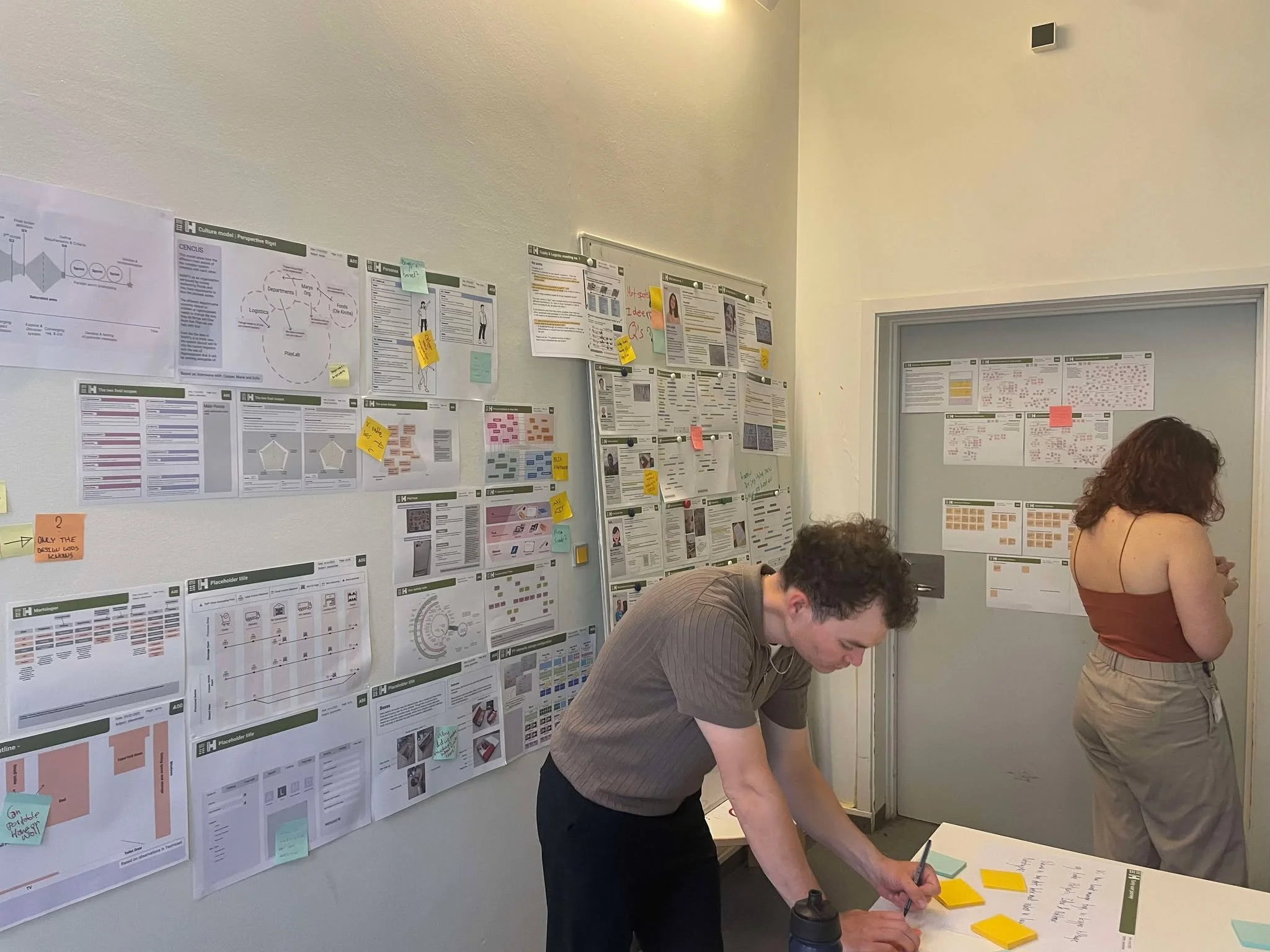
Through system design methods, morphologies, and wall walks, connecting the threads between siloed information proved to be a highly complex challenge, but once the code was cracked, we uncovered unique insights. We had arrived at something truly valuable, and the process was extremely rewarding.
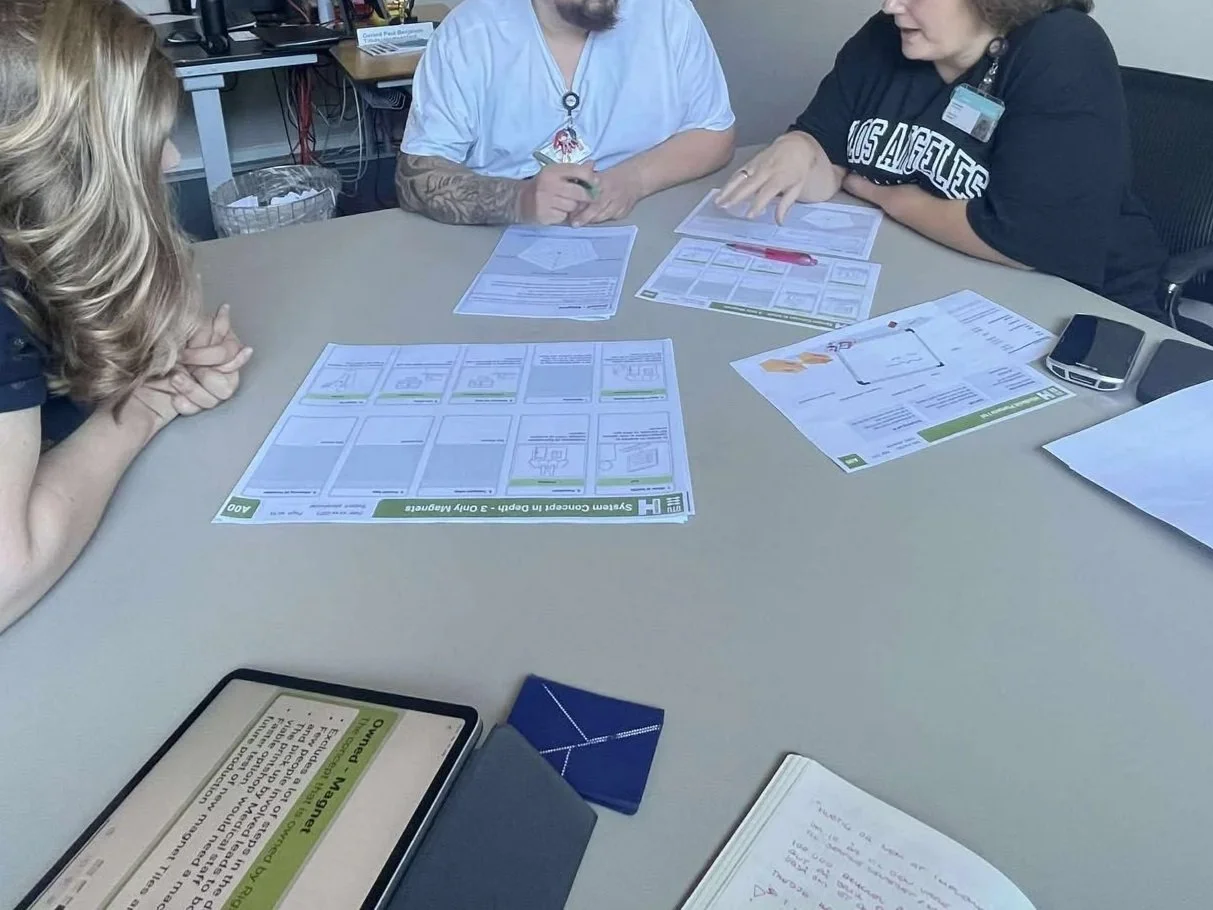
Validating problems and ideas with stakeholders, and grounding them in real contexts, was essential to creating a usable and real-world result.

Co-creating the final product with our target users ensured that it fit their culture and translated information into a language and format aligned with their background.
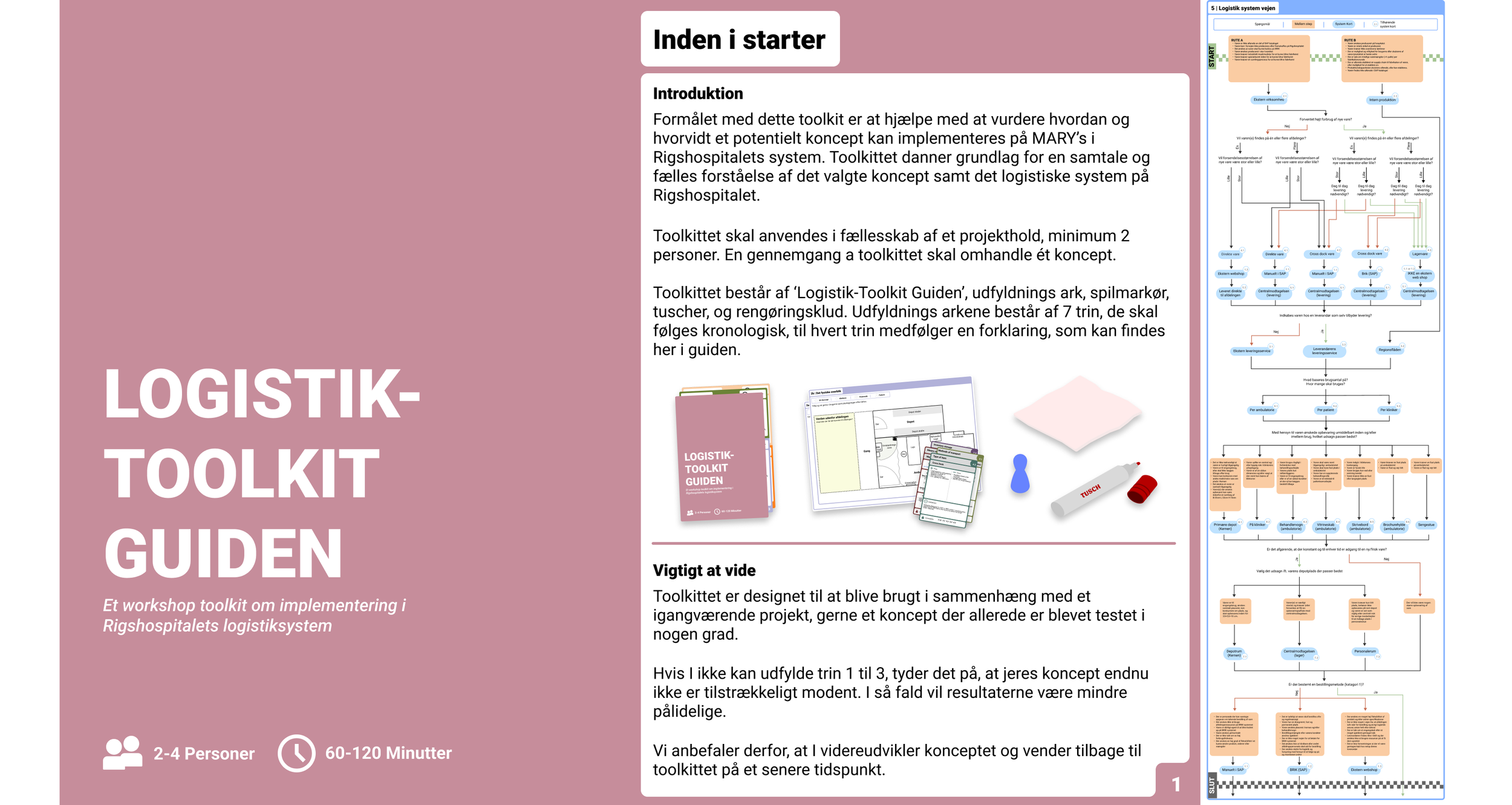
The Logistics ToolKit helps uncover how an idea interacts with the logistics machine – without requiring expert knowledge. It gives clarity on whether an idea truly fits, and if not, where adjustments are needed. This way, you can refine your concept without sanding away the very qualities that made it valuable in the first place.
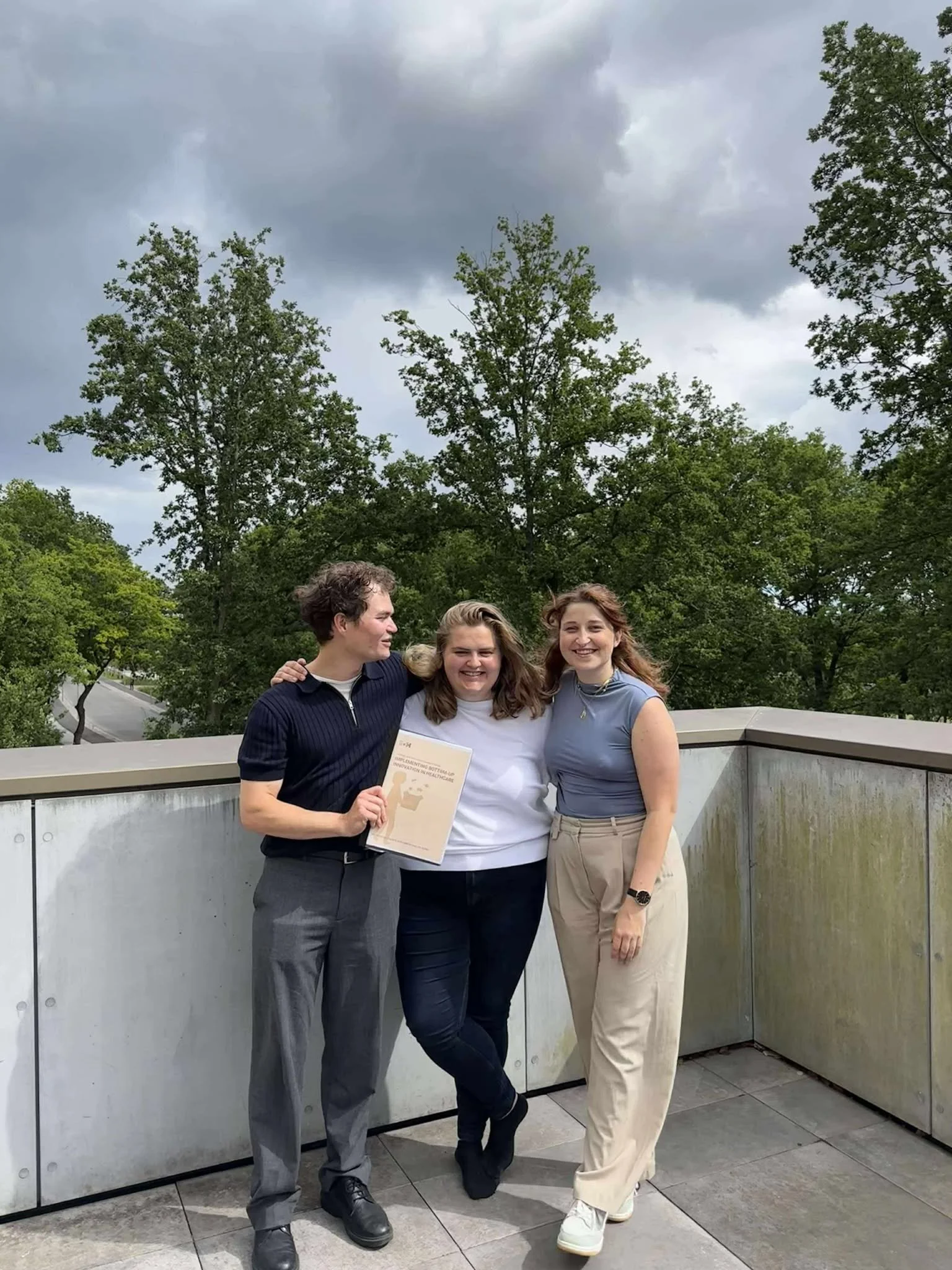
The project culminated in our thesis defense, bringing together months of work and discovery. Our partners at the hospital were, in their own words, 'very impressed.' This photo captures us just after, proud, relieved, and a little exhausted.