Mobility for Commuters - Empowering Seniors To Navigate Their Own Journeys
The problem:
The increasing digitalization of public transportation creates barriers for elderly individuals, limiting their independence, sense of security in public transit and access to essentiel and desired destinations.
The feeling of freedom and independence is, for many, linked to being able to go out and move freely within society. – Ældresagen (2021)
About
Our project addresses the mobility challenges faced by elderly passengers through the lens of Product–Service Systems (PSS). Instead of offering a standalone product, we developed an integrated solution that combines a simple, user-friendly device with a supportive service. This reflects the PSS principle that true value lies not only in the product itself but in the synergy between products, services, and users.
Importantly, concepts like this are developed with great sensitivity to their environmental, economic, and societal impacts. By balancing resource demands with user needs, the solution not only empowers elderly individuals to travel independently and confidently but also contributes to more inclusive and sustainable mobility systems at large.
My role
Conducted user/stakeholder interviews and analysis
Led concept development & validation with Movia
Designed physical aid + subscription service
Result
Empowers elderly users with independent mobility
Economically viable, scalable solution
Concept validated and presented at Movia’s CPH office
Learnings
PSS methods showed how linking products and services creates added value.
Thorough ecosystem-mapping uncovered hidden pain points and needs.
Inclusive design taught me to balance usability with broader sustainability.
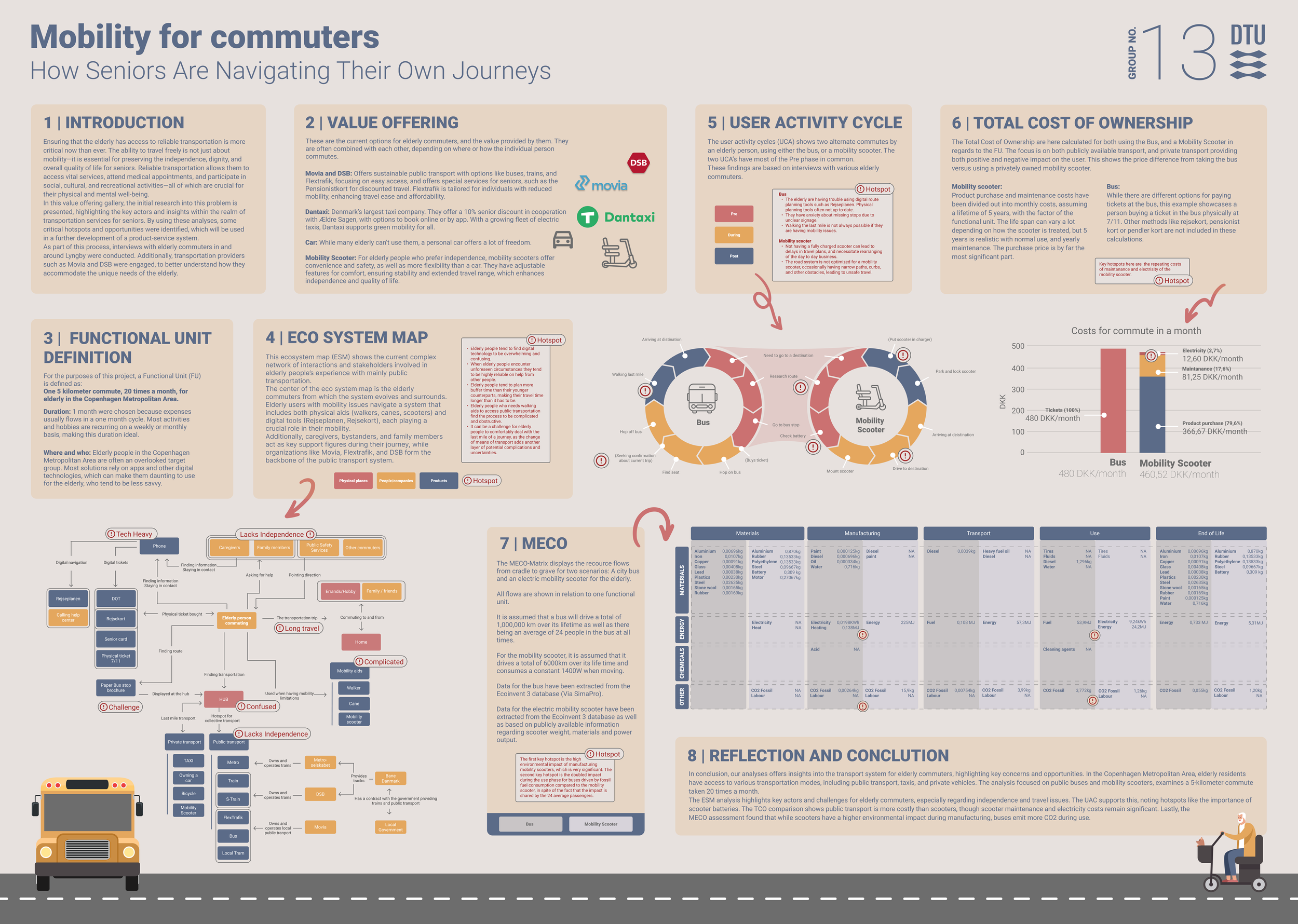
One of the core challenges of this project was making a holistic assessment of the problem space: identifying where the problems are situated, which ones live with the user, which are embedded in our infrastructure and society, and how current value offerings address them, including how they compare in sustainable terms. Understanding these dynamics and pinpointing the real hotspots was central to knowing where to focus our efforts and ultimately to achieving success.
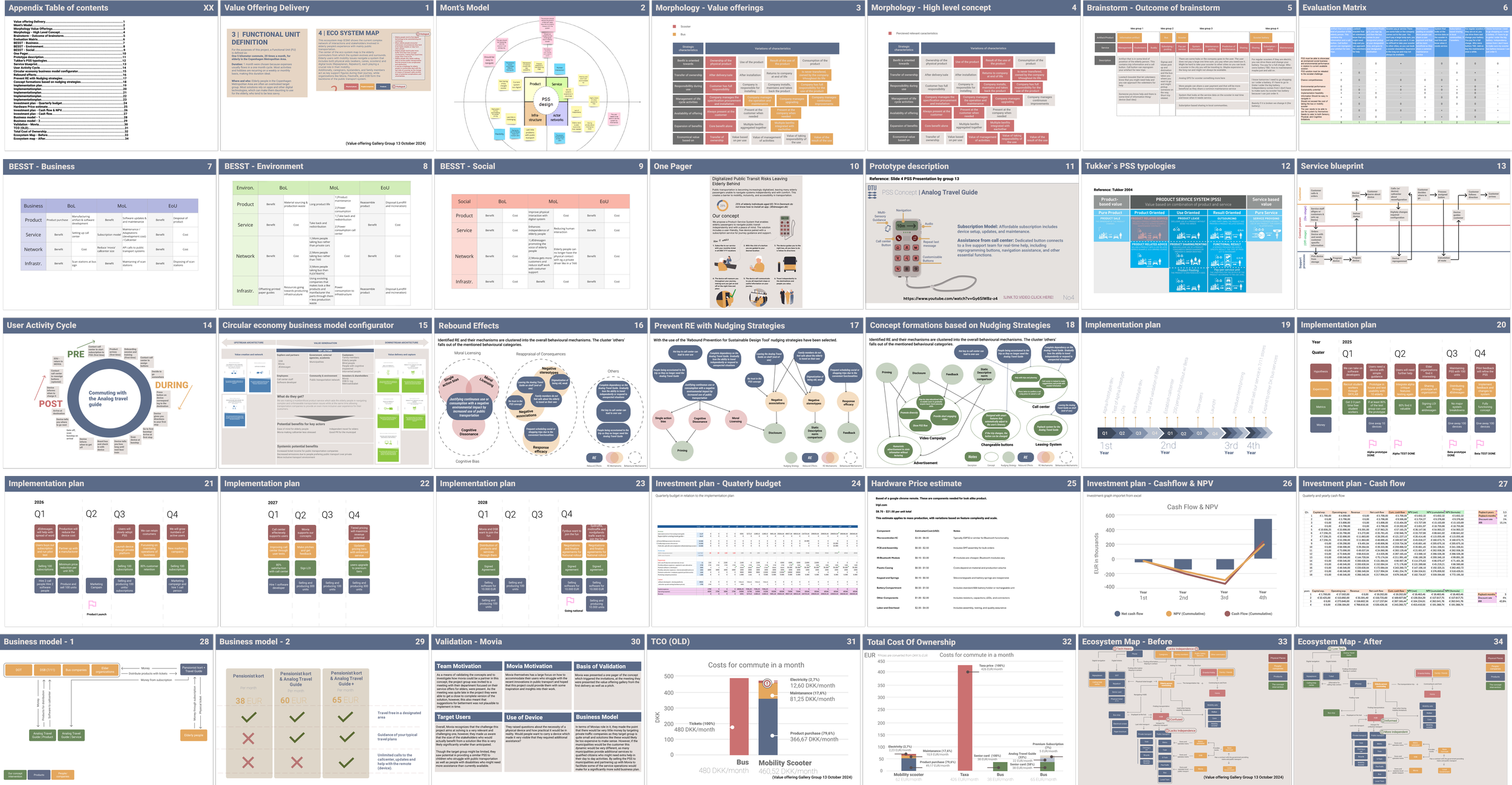
Applying PSS methodologies allowed us to define the problem clearly and develop a solution that was not only user-oriented but also mindful of the broader societal context. This approach helped us design a viable product and business model by leveraging proven product–service system solutions. Maximizing the value created while keeping the required resources as lean as possible became key metrics for success.
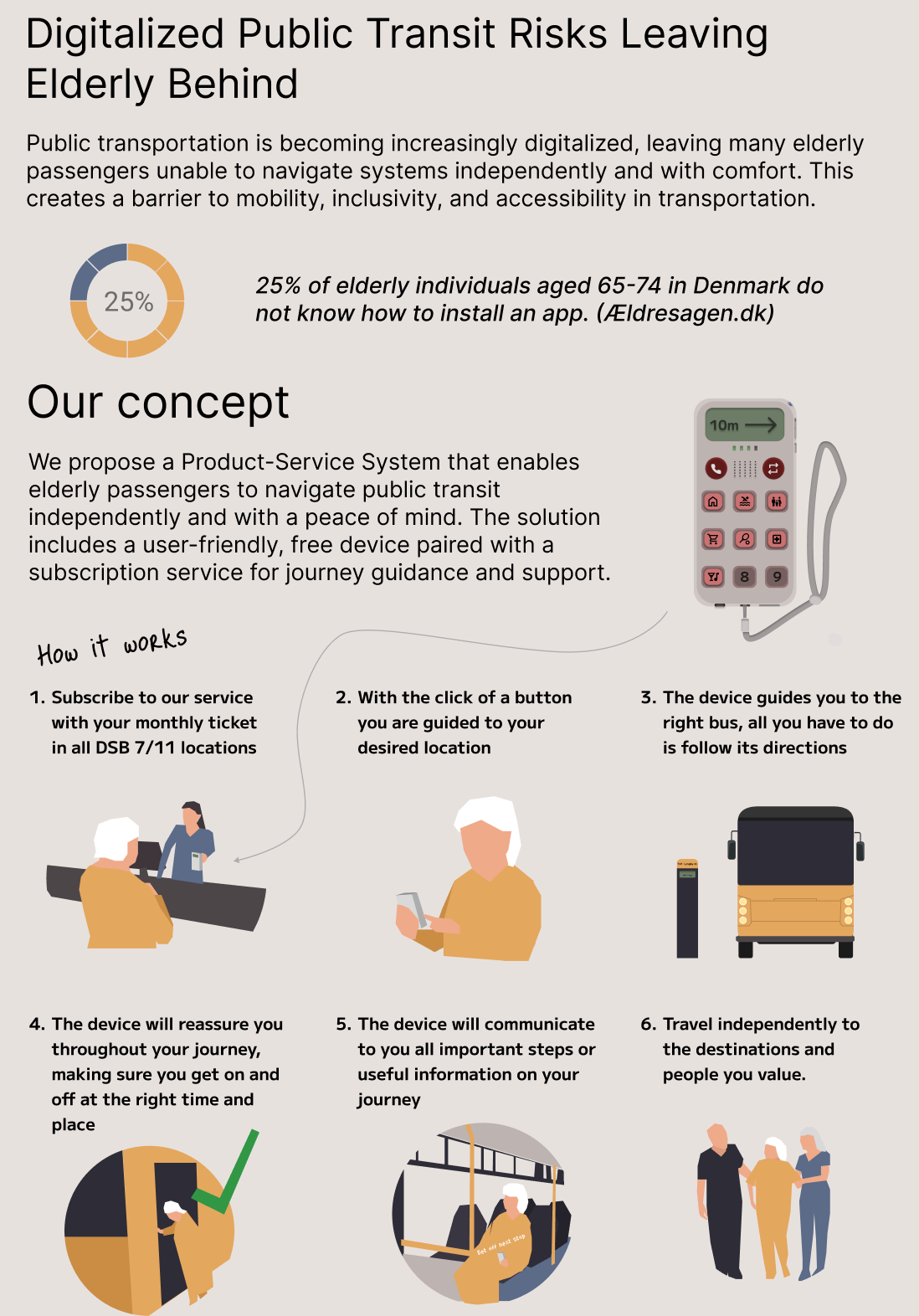
Our solution empowers elderly passengers to travel with independence and confidence. By combining a simple, user-friendly device with a supportive service, it bridges the gap between digitalized transit systems and real user needs — making public transportation more inclusive, accessible, and sustainable.